
Concrete Control Joints: Why Those Lines Matter More Than You Think
Those grooves cut into a concrete slab are not decoration, they are what keep the concrete from cracking randomly. Here is what control joints do and why they matter in Central Texas.
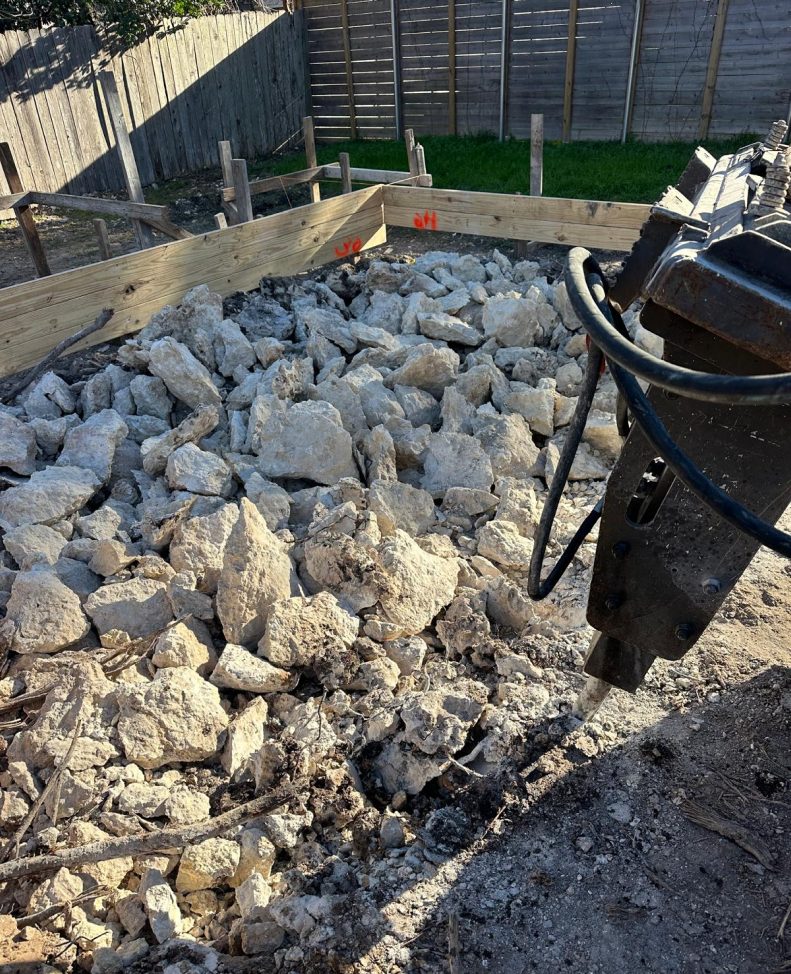
Look at almost any concrete driveway, patio, or sidewalk and you will see lines cut into it at regular intervals. Many homeowners assume these grooves are decorative or arbitrary, but they are one of the most important features of a well-built concrete surface. These are control joints, and their entire purpose is to control where and how concrete cracks. Understanding what they do explains a lot about why some concrete stays looking good for decades while other slabs develop the ugly random cracks that homeowners dread, and it is especially relevant in Central Texas where our soils put concrete under real stress.
The key thing to understand is that concrete cracks, it is not a question of if but where and how. As concrete cures and then as it expands and contracts with temperature and moisture over its life, internal stresses build, and those stresses relieve themselves by cracking. There is no practical way to stop concrete from ever cracking, so the goal of good construction is not to prevent cracks but to control them, directing them to appear in straight, hidden, intentional lines rather than as random jagged cracks across the surface. That is exactly what control joints do.
Control joints work by creating deliberate lines of weakness in the slab. By cutting a groove partway into the concrete at planned intervals, the contractor makes those grooves the weakest points, so when the slab does crack from curing or seasonal movement, it cracks along the bottom of the joint where the line was cut, out of sight, rather than wandering across the surface. The visible groove essentially hides the crack that forms beneath it, keeping the top of the slab looking clean and uncracked. It is a simple idea that makes an enormous difference in how a slab ages.
Placement and timing of control joints is a skill, and getting it wrong causes the very cracking joints are meant to prevent. Joints have to be spaced correctly for the thickness and dimensions of the slab, cut deep enough to actually direct the cracks, and placed at the right locations, and they have to be cut at the right time relative to the pour. Joints spaced too far apart let random cracks form between them, and joints cut too shallow or too late fail to do their job. This is one of the details that separates professional concrete work from a poured slab that cracks up prematurely.
In Central Texas, control joints matter even more because our expansive clay soils drive extra movement. The clay swells and shrinks with moisture through our wet and dry cycles, pushing and settling the concrete above it, which adds to the normal expansion and contraction stresses. Well-designed control joints give all that movement a planned place to relieve itself, which is a big part of why a properly jointed slab holds up in our region while one without adequate joints tends to crack apart. Along with proper base preparation, they are central to crack control here.
So the next time you notice the lines in a concrete slab, know that they are doing important, invisible work: giving inevitable cracks a hidden, controlled place to happen so the surface stays looking sound. Proper control joints, correctly spaced, cut, and timed, are one of the quiet marks of quality concrete construction, especially in Central Texas soils. CIMA Concrete builds driveways, patios, and flatwork with control joints designed for each slab and our local conditions, because managing where concrete cracks is one of the fundamentals of work that lasts.
Planning a concrete project?
CIMA Concrete handles driveway installation, concrete repair, sidewalks, patios, and exterior flatwork with a focus on durability and clean finish work.