
Concrete Patio Drainage in Central Texas
A patio that pools water is not just a comfort problem. In Central Texas, poor drainage is what turns a beautiful slab into a cracked, lifted, stained mess inside a few seasons. Here is what good drainage actually looks like.
Central Texas does not get a lot of rain compared to the rest of the country, but when it does rain, it tends to arrive all at once. A patio outside Lockhart, Luling, or San Marcos can sit dry for weeks and then catch two or three inches in a single afternoon. The slabs that come through those storms cleanly all share the same trait: water has somewhere to go, and going there does not pass over the slab repeatedly. Designing for that reality from the start is what separates a patio that looks good in year ten from one that needs work in year three.
The most important number on a patio plan is slope. A concrete patio should fall away from the house at roughly a quarter inch per foot. That sounds like very little, and it is, but it is enough to keep water moving across the surface instead of pooling in low spots. Slopes shallower than that tend to hold standing water after every storm, which freezes during the occasional Central Texas cold snap, soaks into hairline cracks, and slowly works the slab apart. Slopes steeper than half an inch per foot start to feel uncomfortable underfoot and can make patio furniture wobble. The right pitch is one of the easiest things to get wrong on a DIY pour, and one of the easiest to get right when it is planned from the beginning.
Where the water lands matters as much as how fast it leaves the slab. A patio that drains correctly off its edge but dumps that water against a foundation wall has just moved the problem. Good design pushes runoff to a planting bed, a swale, a French drain, or a gravel transition that lets water absorb into the ground a safe distance from the house. On lots with heavy clay soil — which is most of Central Texas — that absorption is slower than people expect, so the catch area needs more room than instinct suggests.
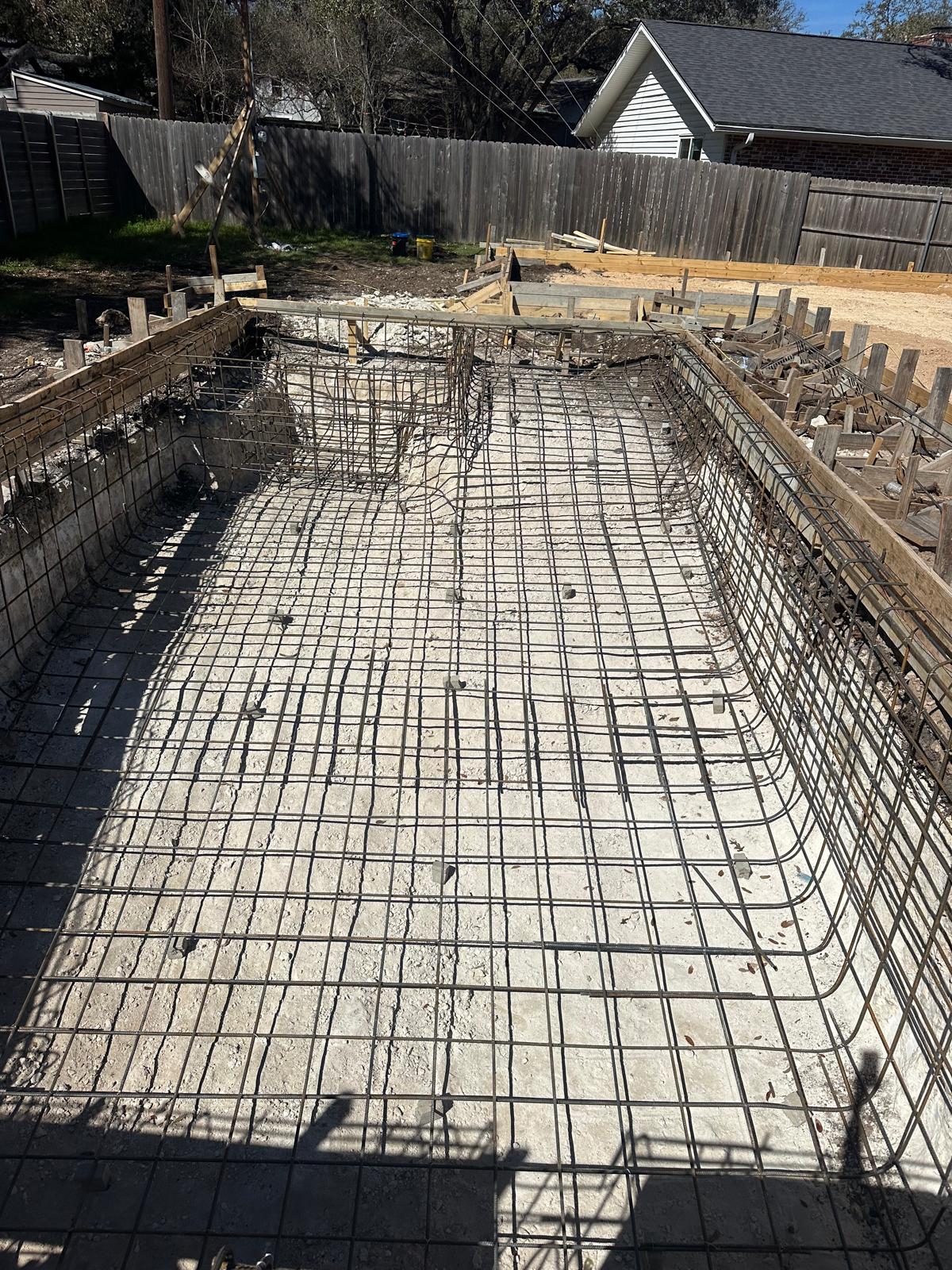
The base under the slab is the part nobody sees and the part that decides long-term performance. A patio poured directly on undisturbed clay is going to lift, drop, and crack as the soil swells and shrinks with moisture. A properly prepared base uses compacted gravel of the correct depth, sometimes a moisture barrier, and reinforcement sized for the slab and the loads it will carry. Skipping that work to save a day on the schedule is the single most common reason patios fail early in this part of Texas.
Finally, the joint pattern is part of the drainage system, not just a cosmetic choice. Control joints placed at the right intervals give the slab a planned place to crack as it cures and as the soil moves underneath, which keeps the cracks where they were designed to be instead of running across the middle of the patio. Joints also break up the surface into smaller drainage zones, which helps water leave the slab faster during heavy rain.
CIMA Concrete designs and pours patios, sidewalks, retaining walls, and exterior flatwork across Central Texas with drainage planned in from the first site visit. A short walk of the property is usually enough to identify where water is going to come from, where it needs to go, and how the patio should be shaped to handle both.
Planning a patio in Central Texas?
We design and build concrete patios, sidewalks, retaining walls, and exterior flatwork with drainage and Texas soil conditions planned in from day one.