
Expansion Joints and Summer Slab Movement in Central Texas
Concrete moves with temperature, and in a Central Texas summer it moves a lot. Expansion and isolation joints are the planned gaps that give a slab somewhere to go, so it does not crack against whatever is in its way.
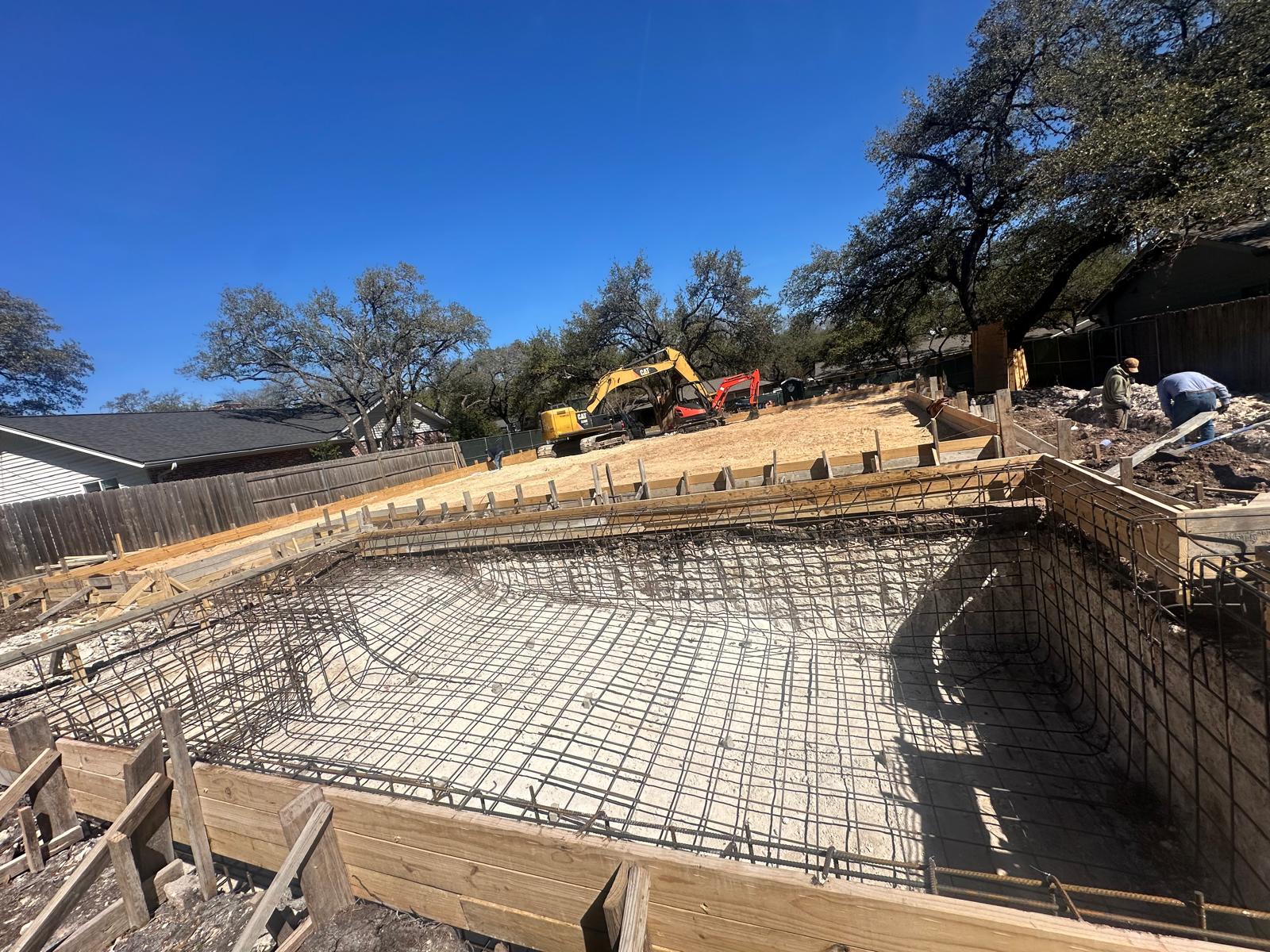
Concrete is not a fixed, unchanging material. It expands as it heats up and contracts as it cools, and a slab sitting in full Central Texas sun can swing through a wide temperature range over a single summer day. If that movement has nowhere to go, the slab pushes against adjacent structures and itself, and the stress eventually relieves as a crack. Joints are how good concrete work plans for that movement instead of fighting it.
Expansion Joints vs. Control Joints
It helps to know the difference. Control joints are the grooved lines you see cut into driveways and sidewalks; they create a weak point so that any cracking happens in a straight, hidden line rather than randomly across the surface. Expansion and isolation joints are full-depth gaps, usually filled with a compressible material, placed where a slab meets a building, a column, or another slab. They let sections move independently so summer expansion does not transfer force where it should not go.
Why It Matters More in Summer
The bigger the temperature swing, the more a slab moves, and Central Texas summers deliver some of the largest swings of the year. A patio that abuts the house, a driveway that meets the garage slab, or a walkway tight against a foundation all need a deliberate gap. Without one, the expanding concrete can crack itself, lift, or even push against and damage the structure it is touching. Properly placed isolation joints absorb that movement quietly, year after year.
Placement Is Planned, Not Guessed
Joint spacing and depth are not arbitrary. They depend on slab thickness, the size of each section, and where the slab connects to other structures. Good crews lay out joints before the pour based on the dimensions and the conditions, then cut control joints at the right time so they actually work. On our expansive clay soils, this planning is part of what keeps a slab intact through both the heat of summer and the soil movement that comes with it.
Cracking is not always a sign of bad concrete, but missing or poorly placed joints almost always make it worse. CIMA Concrete plans joint layout into every slab so movement happens on purpose, in the right places, and out of sight.
Planning a slab this summer?
CIMA Concrete designs and pours driveways, patios, and flatwork across Central Texas with proper joint layout to control summer movement and cracking.