
Why Concrete Cracks in Summer Heat in Central Texas
Summer is the hardest season to pour concrete in Central Texas. High temperatures, dry wind, and intense sun pull moisture out of fresh concrete faster than it can cure, and that is when avoidable cracks appear.
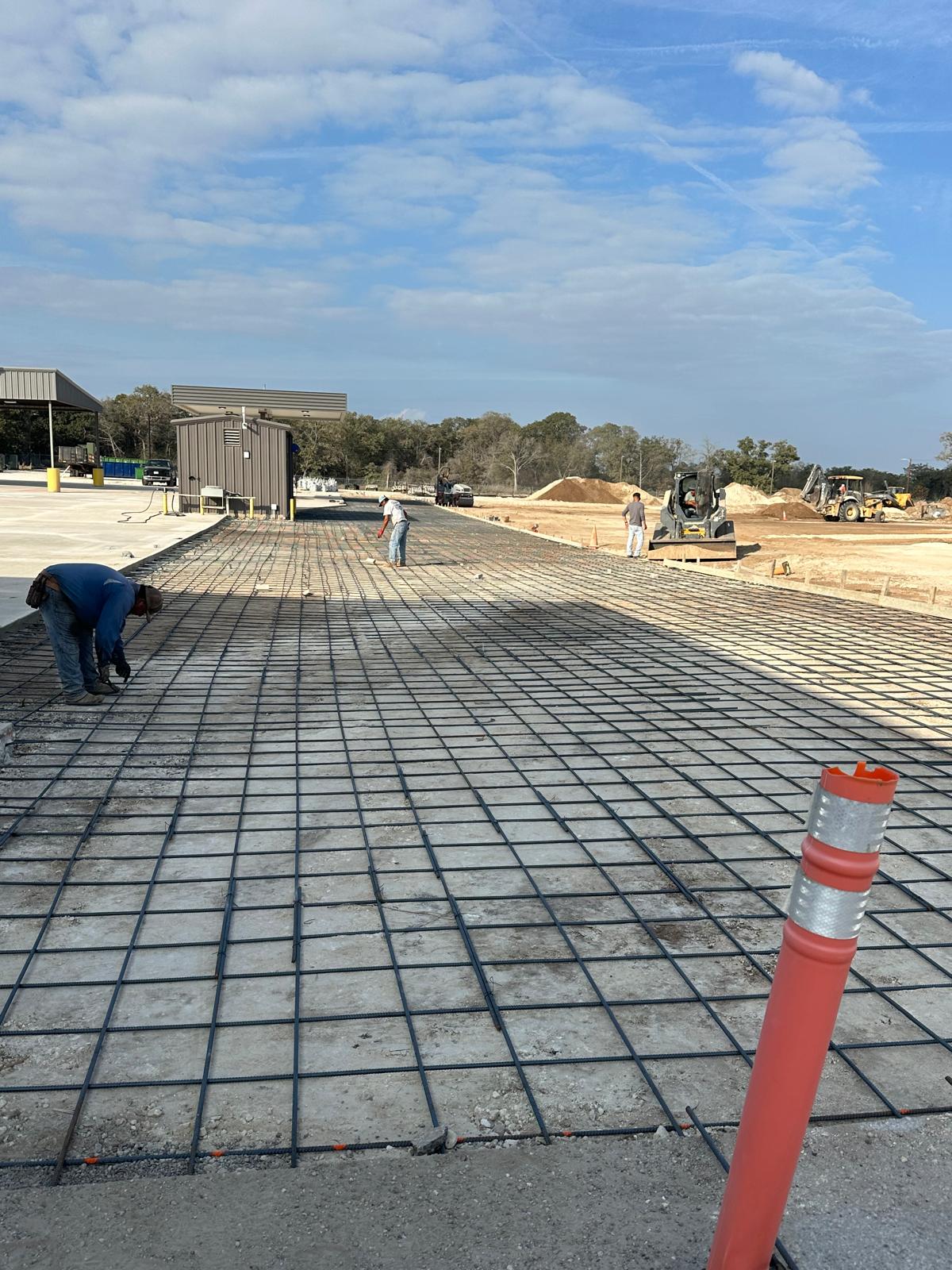
Concrete and Texas summers have a complicated relationship. The chemical reaction that turns a wet pour into a hard slab depends on water staying in the mix long enough to do its job. When the air is well over ninety degrees, the sun is direct, and a dry wind is moving across the surface, that water evaporates far too quickly. The result is concrete that hardens unevenly, develops surface crazing, and is far more likely to crack in the first days after a pour. Around Lockhart, this is the single biggest reason homeowners see problems in summer slabs.
Plastic Shrinkage Cracking
The most common summer issue is plastic shrinkage cracking. This happens while the concrete is still fresh, when the surface dries and shrinks faster than the concrete below it. Thin, random cracks open across the top within hours of finishing. They are almost always a sign that the surface lost moisture too fast, which is exactly what hot, windy afternoons cause. Pouring early in the morning, using evaporation retarders, and protecting the surface from wind all reduce this risk dramatically.
Soil Movement Adds Stress
Central Texas clay soils expand when wet and shrink when they dry out in summer. That seasonal movement puts pressure on a slab from below. If the subgrade was not compacted properly or the slab lacks the right reinforcement and joint spacing, that movement shows up as cracks. A slab built for our soils accounts for this from the start with proper site preparation and correctly placed control joints.
Curing Is Not Optional in Summer
Curing is the step that protects new concrete from the heat, and in summer it matters more than at any other time of year. Keeping the surface damp or covered for the first several days lets the concrete gain strength gradually instead of flash-drying. Skipping or shortening this step is how a slab that looked perfect on day one ends up cracked by the end of the month. Good crews plan the pour time, the mix, and the curing method around the forecast, not in spite of it.
Some hairline cracking is normal in any concrete, but the wide, early cracks that worry homeowners are usually preventable. CIMA Concrete plans summer pours around the weather and cures every slab properly so it holds up through the Central Texas heat.
Pouring concrete this summer?
CIMA Concrete pours driveways, patios, and flatwork built for Central Texas heat, with timing, mix, and curing planned to prevent summer cracking.